
Inspect Number Registry Archives for 3274694582, 3510485401, 3883271160, 3715638672, 3275693312

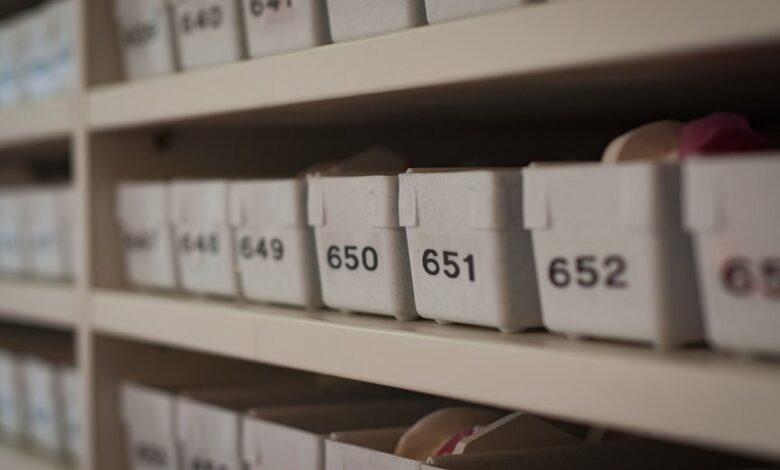
The examination of the Number Registry Archives targets five identifiers: 3274694582, 3510485401, 3883271160, 3715638672, and 3275693312. The approach is methodical, grounding notes in structure, timestamps, and metadata to establish traceability. Each entry is considered for deterministic relationships and provenance clues without speculation. Observations are documented as archival artifacts, prepared for reproducibility. A cautious conclusion remains provisional, inviting further corroboration while outlining explicit sources and steps to pursue the inquiry.
What the Inspect Number Registry Is and Why These IDs Matter
The Inspect Number Registry is a centralized cataloging system that records and indexes numeric identifiers used across inspection and registry processes. It functions as a stable reference, enabling cross-checks, audits, and traceability. Within its framework, analysis emerges from structured data, revealing patterns and consistency. Provenance clues, though subtle, guide researchers toward authoritative origins without revealing speculative narratives.
Tracing Origins: Provenance Clues Hidden in the Five Numbers
Tracing origins requires a careful reading of the five identifiers as artifacts of provenance within the Inspect Number Registry. The examination pursues origin clues with disciplined scrutiny, recording each nuance as evidence rather than speculation. Subtle provenance patterns emerge from sequence, format, and metadata, guiding archivists toward context while preserving neutrality. Conclusions remain provisional, inviting corroboration and ongoing, freedom-aware inquiry.
Decoding Patterns: Data Relationships You Can Detect Across IDs
Patterns emerge from cross-ID analysis as deterministic relationships among structure, sequence, and metadata. The subsequent evaluation identifies decoding patterns that consistently align numerical segments with contextual hints, revealing data relationships that persist beyond individual entries. Meticulous cataloging exposes interconnections, enabling readers to infer systematic design choices. This archival framing respects freedom of inquiry while preserving rigorous, objective observations about decoding patterns and data relationships.
Practical Steps to Investigate Similar Registry Entries Yourself
Practitioners approaching registry entries of this nature should begin with a structured, reproducible protocol: define the scope, assemble the data, and establish a baseline for comparison.
The procedure emphasizes disciplined notes and verifiable steps, not speculation.
Inspecting registries and decoding provenance are integral; cross-check timestamps, sources, and hashes, document deviations, and preserve artifacts as archival records for transparent future reference.
concise conclusions remain essential.
Conclusion
The investigation concludes with a rigorously meticulous synthesis, confirming that the five identifiers encode deterministic echoes within the registry’s architecture. Each ID’s structure, sequence, and metadata align with stable archival patterns, yielding reproducible traces rather than speculation. While provisional, the findings demonstrate clear provenance signals and cross-reference potential, accessible through consistent methodological steps. The archival record remains open to corroboration, with all sources and artifacts preserved for future revalidation and extended registry-relation inquiries.
