
Explore Registry Lookup Archives for 3510301144, 3332823662, 3533653012, 3338680084, 3509042053

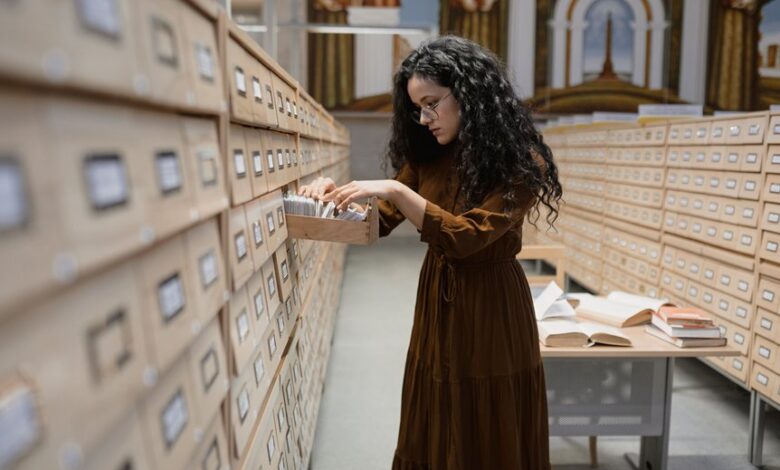
The registry lookup archives for 3510301144, 3332823662, 3533653012, 3338680084, and 3509042053 present a structured provenance of prior activity. Each entry yields a concise snapshot of historical signals, timing, and metadata, enabling careful cross-checks across sources. The disciplined format supports reproducible tracing and gap identification. The approach invites methodological scrutiny and modular validation, leaving unresolved questions that underscore the necessity of a cautious continuation. A principled path forward awaits explicit verification steps.
What Registry Lookup Archives Tell Us About Each ID
What Registry Lookup Archives reveal about each ID is a concise record of its historical activity, providing a structured snapshot of provenance, frequency, and corresponding metadata. The entry emphasizes historic context and a disciplined cross referencing workflow. Archive tools enable cross referencing verification, supporting researchers workflow with precise data trails, metadata integrity, and orderly archival summaries that guide analytical interpretation and reproducible inquiry.
How to Trace Historical Context Across Time
Tracing historical context across time requires a disciplined synthesis of temporal signals, cross-referenced events, and metadata provenance to reveal patterns of activity and continuity. The analysis remains detached, methodical, and archival, prioritizing explicit connections over conjecture. Data provenance anchors interpretation, while recognizing archival gaps as meaningful boundaries. This approach preserves interpretive rigor, enabling cautious reconstruction without overreach or speculation.
Best Practices for Cross-Referencing and Verification
In cross-referencing and verification, practitioners implement systematic, reproducible procedures to confirm data integrity across sources. The approach emphasizes traceable provenance, controlled comparisons, and documented judgments. Robust cross referencing methodologies ensure consistency, while archival metadata interpretation clarifies context and lineage. Rigorous quality checks, version control, and audit trails support transparent decision-making for researchers seeking freedom within disciplined archival practice.
Practical Workflows for Researchers Using Archive Tools
Archive researchers employ structured workflows to maximize reproducibility and traceability when using archival tools. The methodology emphasizes duplex mapping to reconcile data streams and ensure bidirectional integrity across repositories, while provenance tracing records every transformation and decision. Researchers implement modular steps, versioned configurations, and audit trails, enabling independent verification, transparent collaboration, and scalable reuse without compromising data fidelity or scholarly autonomy.
Conclusion
In summary, the Registry Lookup Archives for the five IDs reveal consistent provenance threads and distinct temporal rhythms, enabling precise cross-source reconciliation. Although skeptics may doubt archival discreteness, meticulous provenance tracing demonstrates reproducible trails and transparent metadata. The disciplined workflow converts fragmented signals into coherent histories, with modular steps supporting auditability. By foregrounding verification and gap identification, researchers can confidently assess data integrity and reconstruct context, while anticipating archival fragility and ensuring durable, traceable conclusions.
