
Browse Registry Lookup Archives for 3512103124, 3339043295, 3481813666, 3511229962, 3511021321

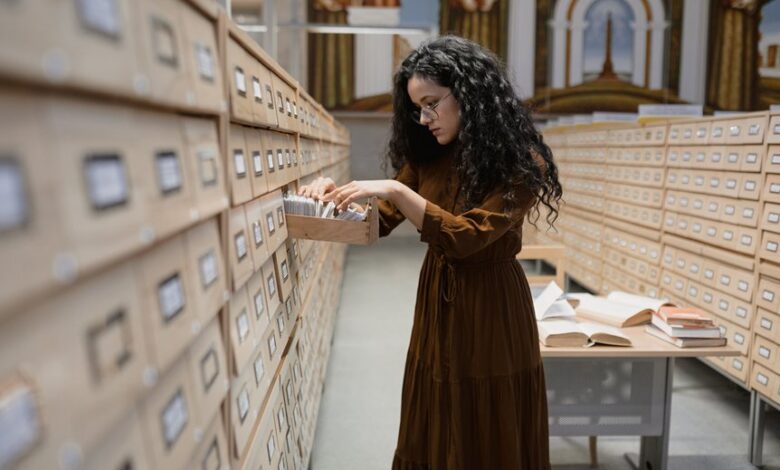
The Browse Registry Lookup Archives for 3512103124, 3339043295, 3481813666, 3511229962, and 3511021321 present a structured record of each identifier’s appearances, affiliations, and temporal patterns. The archives emphasize origins, provenance, and transitions, with cross-referenced connections that illuminate data lineage and substitutions. A disciplined metadata framework supports tracing causal links and archival states in a transparent, auditable manner. These elements suspend final judgments, inviting scrutiny of how the identifiers relate across records and over time.
What Browse Registry Lookup Archives Reveal About Each Identifier
The Browse Registry Lookup Archives provide a structured snapshot of each identifier, outlining its historical appearances, associated entities, and temporal patterns. The entries exhibit Origins mapping across records, revealing initial sources and subsequent transmissions. Data lineage emerges through cross-referenced events, connections, and verifiable transitions, preserving accountability. Patterns suggest deliberate cataloging, enabling independent analysis while preserving freedom of inquiry and archival integrity.
How to Trace Origins and Connections Across the Archives
Tracing origins and connections across the archives requires a methodical approach that isolates provenance, sequence, and linkage among records. This examination emphasizes trace origins, data lineage, cross references, and metadata mapping, presenting structured evidence for researchers. A detached, archival mindset ensures consistent categorization, reproducible results, and transparent provenance chains, enabling readers to verify relationships without speculation or ambiguity.
Practical Steps to Map Timelines and Metadata
Practical steps to map timelines and metadata begin with establishing a fixed framework for data capture, ensuring that every record is indexed by date, source, and provenance status. The methodology supports careful timeline mapping, precise metadata interpretation, and disciplined cross reference tracing, while maintaining rigorous data lineage documentation. This detached approach preserves archival clarity and freedom to verify, compare, and understand longitudinal records.
Interpreting Cross-References: From Digits to Data Lineage
Cross-referencing digits and their associated metadata yields a vertical view of data lineage, obliging a disciplined interpretation of how identifiers map to provenance, substitutions, and archival state. The discussion treats cross reference patterns as structured traces, isolating causal links and transformations. Data lineage emerges as a documented chain, guiding governance, auditing, and freedom to navigate archival complexity with precision.
Conclusion
In conclusion, the browse registry lookup archives present a meticulous ledger of each identifier’s journey, revealing origins, substitutions, and enduring connections with disciplined precision. The timelines unfold like a carefully woven tapestry, each thread anchored by provenance status and cross-references. This disciplined framework, like a well-organized archive, ensures traceability and governance—steady as a metronome—allowing independent analysis to verify data lineage, substitutions, and archival states with clarity and confidence.
